#2I’ve seen a lot of experimental films experiment with time, as in the scenes jumping quickly, the reason being, to make some point and force the viewers to look at whatever the filmmakers meaning behind the film. There is diminished viewing in that way but I also see some artistic films have a vastly different plot with diminished viewing but those films were all very excellent. This diminished viewing the author is mainly talking about though is in reference to the history of film, back when you couldn’t save a film so easily because computers were not in existence. Archives popped up all over the world to keep what films were deemed essential and most important; but many films sustained damage through general abuse, alterations, mishaps and so much more. As someone who lives in the booming age of digital technology I’ve always noticed how different the quality was on these movies and quite frankly most of the older films bored me to death. Personally, I feel like films in the beginning were treated like amusement parks: you go one time and have the most fun exciting day ever and you don’t go back for a very long time. I feel if film was seen by the public as more of an art we would have many more unique and interesting old films. That said, there are definitely amazing experimental films from cinemas history if you look for them hard enough. It is sad that some truly innovative and insanely creative old films were just left behind in history; forever gone or perhaps tampered. These older films are usually damaged and because of that the past really does remain in the past and we all think of a time where cinema has this long history of new and exciting styles that will forever live on. The author talks a lot about deteriorating films and this idea of identification that’s centralized on the whole screen and not the people. The deterioration whether intentional or not is setting this very big concept about focusing on the world as a whole/nonhuman objects. Personally, I would imagine these types of films that bring in stories of love and loss on a big world view might make me feel less alone. For example, the video on AIDS, that the author writes about which contains dispersion, has one story told my many different people thereby created some sense of unity to fight this dreadful disease. For me it’s always been unthinkable to get some kind of terrible disease because I would never not want to be completely who I am, so like many people, I share that fear. All the talk of these films that show things like death as a part of life, rather than some demon to avoid at all costs. By normalizing something like death, you give the viewer a lot of interest; the viewer may even start their own process of coming to accept that it is just a part of life. I think it’s so interesting that this is such a huge part of cinema history whilst also being a huge part of eastern philosophy. I have read the Tibetan book of the dead so I am a big believer that you must treat death as a spiritual experience and that it is just simply a part of life. There is another idea that the author mentions about dispersing relations by humans around a lot plus just the general dispersion of people and things. Mixing up space and time in emulsion where there is some sort of peace between figures and surfaces holds true to a bigger world picture. Doing that in the decaying film will make that even more confusing. These films are so necessary to watch in order to normalize death, and also appreciate cinema’s history and the real beauty of film. In many of these films people are forming meaningful relationships in the face of dissolution which is similar to what happens in real life too. All people want is to have people they love as they slowly and inevitably come to the end of life. People need a reason and meaning for being even if there isn’t any reason or being. The thing is that in life people can do terrible things and possibly cause you to trust no one and if that’s true then decaying film can really speak to such people who literally hate all people. In some of the decaying films you can barely make out what’s going on or who is who and today that speaks to the true history as well in that we don’t really know the people who lived before us but cinema is the most you could ever see of a person. Unlike written history, cinema gives us a person: their personality, there spirit and who they really were which isn't honest completely but at least you really see them in their full body form; they have left their mark in some way. Some stories don’t have closure, some make the statement of mourning where you choose to remember the person always developing this melancholia. Not only is death normalized but if mourning is looked at as in death of an object it is not as traumatic. That said not all these films were crazy about morbid death, but rather embracing of meaningful relationships and all that would matter in states of constant dissolution. Dissolution of people, death, ego and the reminder of the past. I like that there is an emphasis on the idea of self and exploration into love and loss because I think people can really benefit from healing things within themselves in order to do whatever it is there most passionate about. People usually do things out of fear so if people can watch some old movies involving displacement, uncertainly, nonhuman importance, loss of ego, damaged hard to see and changing identification it would certainly do the world some good to see where the world was then and where the world is now. I feel strongly about eastern philosophy and also that everyone needs to work on themselves and the films I am hearing about in this article would almost be like therapy. Therapy is seriously what this world needs and the idea that death is a process not an imminent end because it could very well be nothing. Even if it is nothing, it’s not like you would have feelings anymore and last I checked my generation is trying as hard as possible not to feel. So really death is almost a blessing that comes so we don’t have to feel anymore, that said we should all try to make something of our lives not for our own gratification, but to help others in a big way and leave a mark on the world in our discoveries and intentional or unintentional aid.
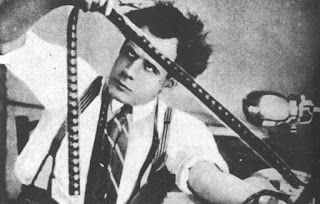
#3 I’ve experienced seeing something during editing that as I was watching it, changed the scene completely because I saw that it might flow better. Editing is like a puzzle that is actually easy to solve, but the pieces can fit in thousands of different ways. I can’t say the same thing in regards to older methods but I can say I actually hate avid with a passion. That program is incredibly complicated and if I am the one that has to edit this film, then I would like the software to be straightforward, so that I don’t have to go through the pain of learning it, meanwhile I could have used an adobe program or final cut and just easily get what I was looking for without all the hassle. I didn’t know early editors were women; I get sick about hearing only guys doing things when I know women in art history bring a lot of creative and innovative art pieces. I do know that women directors with feminist backgrounds were big in the early horror movies. The women in those movies are shown to be...
Comments
Post a Comment